婚礼和服指南:白无垢、打掛与紋付袴详解
Weddings 8 min read

婚礼和服指南:白无垢、打掛与紋付袴详解

Why Japanese Wedding Kimono Still Matter Today

Traditional Japanese wedding attire carries centuries of meaning that Western dress simply cannot replicate. Even in 2024, roughly 30–40% of couples in Japan incorporate at least one kimono costume change — known as お色直し (o-iro-naoshi) — into their wedding day, according to Recruit Bridal's annual survey. For international couples, wearing kimono is often the single most memorable and photographed element of the entire celebration. Japanese bridal kimono are not one-size-fits-all garments thrown on quickly. Each ensemble involves multiple layers, specific undergarments, a formal obi (sash), and accessories that together can take a skilled dresser (着付師, kitsuke-shi) 45–90 minutes to complete. Understanding what each garment means — and when it is worn — helps you communicate clearly with your venue coordinator and avoids costly misunderstandings. Most shrine ceremonies and traditional ryotei (Japanese-style restaurant) receptions accommodate kimono seamlessly. Larger hotels in Tokyo, Kyoto, and Osaka have in-house kitsuke rooms and partner with established kimono rental companies. Booking your attire and dresser at least six months in advance is strongly recommended, especially if your wedding falls during peak seasons like spring cherry blossom (late March–April) or autumn foliage (October–November).

Tip: Ask your venue coordinator specifically whether they have an on-site kitsuke room (着付け室). Dressing off-site and travelling to a shrine in full shiromuku is possible but adds logistical complexity.

Shiromuku: The All-White Bridal Ensemble

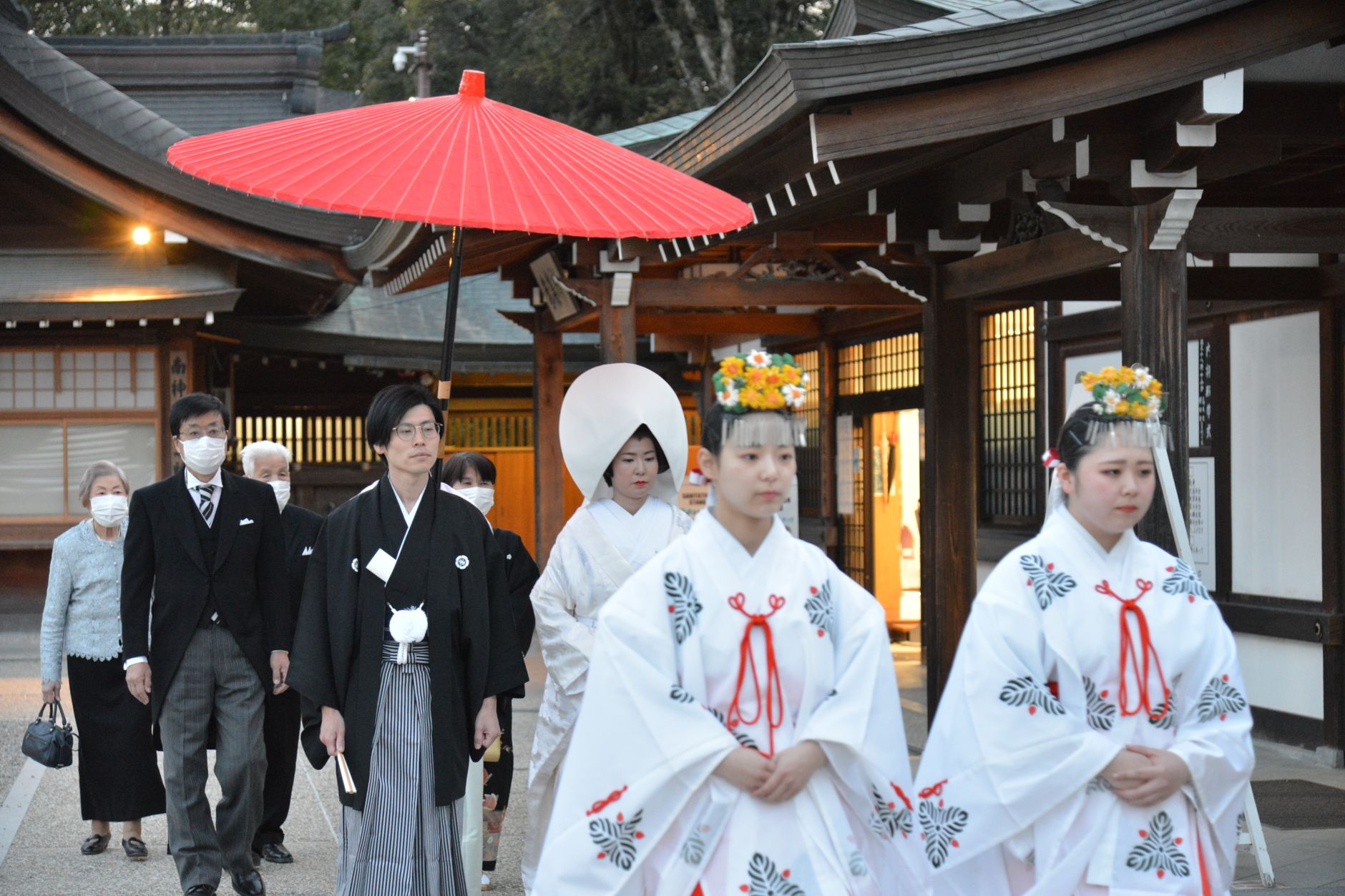
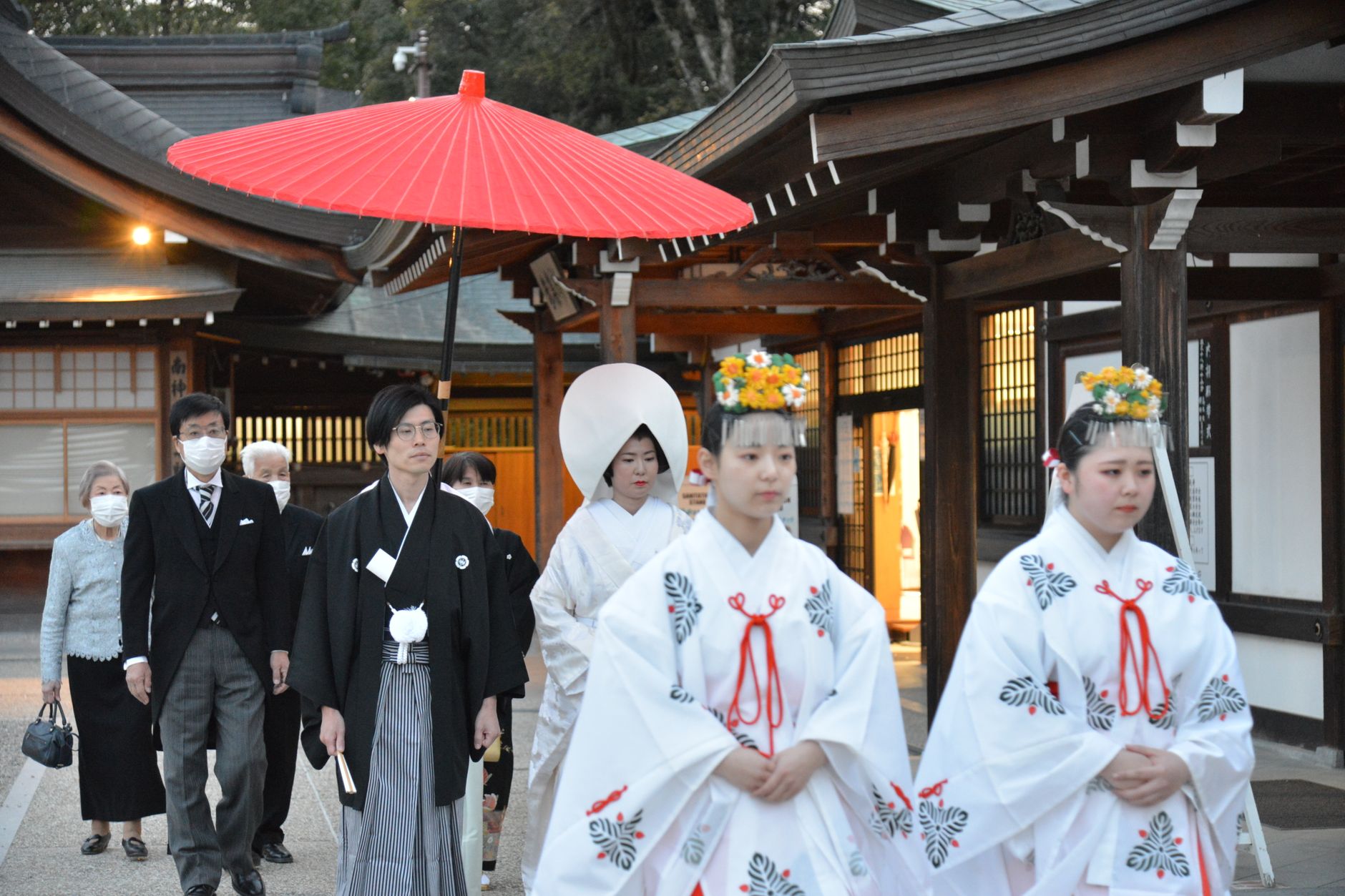
The shiromuku (白無垢) is the most sacred and formal bridal kimono in Japanese tradition. Every single element — the furisode-style kimono, the kakeshita (inner robe), the obi, the obiage (sash lift), the obijime (sash cord), and even the fan — is pure white. White in this context symbolises purity, the bride's readiness to be 'dyed' in the colours of her new family, and a clean beginning to married life. The signature headpiece worn with shiromuku is the wataboshi (綿帽子), a large domed white hood that completely covers the elaborate hair styling or katsura (wig) beneath. Alternatively, brides choose the tsunokakushi (角隠し), a wide white headband that conceals the hair. The wataboshi is traditionally only removed when the bride faces her groom at the altar — a genuinely moving moment during Shinto ceremonies. Shiromuku rental at a reputable Kyoto kimono atelier or hotel bridal salon typically ranges from ¥80,000 to ¥250,000 for the full set, including all accessories, the katsura wig, and one dressing session. Purchasing a high-quality antique shiromuku can cost ¥300,000–¥800,000 or more for meisen silk, while new hand-woven silk (nishiki) examples from Nishijin weavers in Kyoto can exceed ¥1,500,000. Most international couples rent rather than buy. The shiromuku is almost exclusively worn during the ceremony itself, particularly at Shinto shrines. After the ceremony, brides frequently change into a colourful uchikake or a Western wedding dress for the reception — this costume change is both traditional and highly anticipated by guests.

Tip: If you want the iconic wataboshi look, confirm in advance that the kitsuke-shi at your venue is trained in fitting it correctly. Not all dressers outside Kyoto and Tokyo work with it regularly.

Uchikake: The Dramatic Outer Robe

The uchikake (打掛) is an opulent, heavily embroidered outer robe worn trailing along the floor — it is never tucked into an obi but simply draped over the shoulders and allowed to pool dramatically behind the bride. Because it functions as an outer coat, it is worn over a white kakeshita and a bright obi, making it one of the most visually spectacular garments in any Japanese wedding. Traditionally, uchikake come in either pure white (shiro uchikake) or richly coloured designs (iro uchikake). The white version is appropriate for the ceremony and shares the purity symbolism of shiromuku. Coloured iro uchikake — featuring cranes (長寿, longevity), pine, bamboo, plum blossoms, or flowing water motifs — are worn during the reception and are the garment most couples associate with the dramatic Japanese bridal aesthetic. Red (aka) is the most traditional colour; gold, blush, navy, and sage green are popular contemporary choices. The embroidery technique matters enormously to price and formality. Shibori (tie-dye texture) and nuihaku (embroidery with gold leaf) uchikake are the most prestigious. Rental prices for a quality iro uchikake range from ¥100,000 to ¥400,000 at major bridal salons. Brands such as Watabe Wedding, Takami Bridal, and the Kyoto-based Miyabitei are well-known suppliers. Some uchikake available at heritage ateliers are genuine antiques 80–150 years old; their rental includes careful handling protocols. For the reception entrance (お色直し入場), wearing iro uchikake with the obi on display — slightly different from the trailing ceremony style — is completely standard. Many couples plan their entrance song and lighting specifically around the trailing hem, which can span 1–1.5 metres and requires a kitsuke-shi or wedding attendant to arrange it before the walk.

Tip: Choose your uchikake colour with your reception venue's interior in mind. Crimson reads beautifully against Kyoto machiya woodwork; pale gold suits hotel ballroom lighting. Ask to see photos from past ceremonies in your specific venue space.

Montsuki Hakama: The Groom's Formal Attire

While much attention focuses on the bride, the groom's traditional ensemble is equally codified and impressive. The most formal male wedding kimono is the kuro montsuki hakama (黒紋付袴): a black haori (hip-length jacket) and kimono bearing five family crests (go-mon), worn over white or light grey hakama (wide pleated trousers). This is considered the highest level of formal dress for Japanese men, equivalent in standing to a morning coat in Western contexts. The five crests are critical to formality. They appear on both sleeves, both lapels, and the back — always in white against the black fabric. Traditionally these are the wearer's actual family mon (家紋); for international grooms who do not have a Japanese family crest, a generic crest (通紋, tsūmon) such as the kikukiri (chrysanthemum) or mitsuba aoi can be used with the rental. Your rental shop will explain the options clearly. Underneath the haori, the groom wears a white nagajuban (under-robe) and a white obiage visible at the collar — white accessories throughout reinforce the ceremonial purity of the occasion. The ensemble is completed with white tabi socks and zori sandals. Groom's montsuki rental ranges from ¥30,000 to ¥80,000, notably less expensive than bridal kimono, and fitting typically takes 20–30 minutes. Some grooms prefer a softer colour palette: dove grey (nezumi-iro) or deep navy montsuki exist and are acceptable for receptions, though not strictly correct for Shinto ceremonies. If your wedding is a Shinto ceremony followed by a Western-style party, many grooms wear montsuki for the ceremony and change into a suit or tuxedo for the evening — a perfectly common and accepted approach.

Tip: International grooms are sometimes offered a simplified hakama rental without proper family crests. Insist on seeing the crest placement before confirming your booking — it genuinely changes how the garment looks in photographs.

Hair, Accessories & the Art of Kitsuke

A complete bridal kimono look relies on hair and accessories that most international couples are unfamiliar with. The traditional bridal hairstyle is the bunkin takashimada (文金高島田) — a high, lacquered shimada bun pinned with elaborate kanzashi (hairpins) featuring dangling silk flowers, tortoiseshell combs, and gold or silver ornaments. For many brides, wearing a katsura (professional wig already styled in this manner) is far more practical than spending three hours having their own hair set and lacquered. Kanzashi come in seasonal designs: sakura (cherry blossom) kanzashi for spring weddings, momiji (maple leaf) for autumn, and pine or plum for winter ceremonies. Choosing kanzashi that match your wedding season is a lovely detail that Japanese guests will notice and appreciate. A full kanzashi set for rental is typically ¥15,000–¥40,000 on top of the kimono rental. The kitsuke-shi (kimono dresser) is the unsung hero of any traditional Japanese wedding. A skilled kitsuke-shi doesn't just tie knots — they understand posture, know how to pad the body to achieve the correct cylindrical silhouette traditional kimono requires, and can troubleshoot any fit issues. For international brides, particularly those with non-Japanese body proportions, working with an experienced kitsuke-shi is essential. Ask your bridal salon specifically how many foreign brides their dresser has worked with. Other key accessories include the hakoseko (small decorative pouch tucked into the breast fold), the kaiken (decorative dagger, a symbol of the bride's resolve), and the sensu (folded fan tucked into the obi). None of these are functional items; they are purely ceremonial but are included in most full rental packages. Forgetting any of them in photographs is something you will notice later — confirm they are all present at the fitting.

Tip: Schedule a full dress rehearsal (仮縫い, karinoui, or simply a 'trial dressing') at least two weeks before your wedding. This lets you practice walking, sitting, and using a toilet in kimono — all of which require specific technique.

Renting vs. Buying: Real Costs & Where to Shop

For international couples, renting is almost always the practical and financially sensible choice. A complete bridal rental package (shiromuku or uchikake + all accessories + katsura + kitsuke session) at a reputable Tokyo or Kyoto bridal salon costs ¥150,000–¥500,000. This sounds significant, but it includes garments worth several million yen, professional dressing, and often hair and makeup as a bundled service. Major providers include Takami Bridal (multiple Tokyo locations), Kyoto Nishiki-ya, and the bridal departments of hotels such as The Westin Miyako Kyoto or The Prince Park Tower Tokyo. If you plan to keep a kimono as a heirloom, purchasing vintage uchikake through specialist dealers in Kyoto's Nishiki market area or through curated online platforms like Yamatoku Classic is feasible. Expect to pay ¥80,000–¥300,000 for a good-condition vintage silk uchikake. Note that antique kimono often require professional alterations (お仕立て直し) costing an additional ¥30,000–¥80,000 to fit a non-Japanese body. Destination wedding packages offered by shrines and hotels frequently bundle kimono rental with ceremony fees. For example, Meiji Jingu in Tokyo and Shimogamo Shrine in Kyoto offer complete ceremony packages starting around ¥300,000–¥500,000 that include kimono consultation. These bundled packages are often the easiest entry point for international couples working through a Japan-based wedding coordinator. Be cautious of extremely cheap rentals (under ¥50,000 for a complete bridal set) advertised on tourist-facing websites. These often use synthetic fabric (polyester) kimono, simplified accessories, and may not include a qualified kitsuke-shi. The difference between silk and polyester is immediately visible in photographs and is worth the price difference for a once-in-a-lifetime event.

Tip: If your budget is limited, prioritise the uchikake quality over the shiromuku quality — the uchikake appears in the most reception photographs and is worn for the longest total time during the day.

Practical Planning: Timeline, Seasons & Cultural Etiquette

The best seasons for wearing kimono in Japan align conveniently with the most popular wedding periods. Spring (late March–May) and autumn (October–November) offer comfortable temperatures for heavily layered kimono, beautiful natural backdrops for outdoor photography, and the highest concentration of experienced bridal staff at venues. Summer (July–August) is genuinely challenging — a full shiromuku ensemble in Kyoto's 35°C humidity is an endurance event. If you must marry in summer, choose a venue with strong air conditioning and minimise outdoor time. Cultural etiquette for wearing kimono as a foreign bride is simpler than you might fear. Japanese people are genuinely welcoming of international couples embracing traditional dress and virtually never regard it as cultural appropriation when done respectfully and with appropriate support from local professionals. The key markers of respect are: working with a licensed kitsuke-shi, treating the garments carefully, and not purchasing cheap costume versions. Your Japanese guests will be deeply moved to see you honour this tradition. For the o-iro-naoshi (costume change), build at least 45–60 minutes into your reception schedule. Changing out of a full shiromuku into an uchikake or Western dress requires your kitsuke-shi to be present backstage, and rushing this change leads to errors. Most Japanese wedding receptions last 3–4 hours total, so plan your program around one costume change maximum to keep the evening flowing. Finally, discuss footwear honestly with your kitsuke-shi. Traditional zori sandals with tabi socks look correct but can be genuinely uncomfortable if you are not accustomed to them. Many brides wear zori only for the ceremony and photographs, then change to comfortable shoes hidden beneath the uchikake's long hem during the reception. This is a completely accepted and common practical solution.

Tip: Create a bilingual 'kimono schedule card' for your wedding day listing each dresser, fitting time, costume change time, and photography window. Share it with your Japanese venue coordinator in Japanese — it prevents the most common timing miscommunications on the day.