在日本举办私奔婚礼与誓言更新仪式:完全指南
Weddings 9 min read

在日本举办私奔婚礼与誓言更新仪式:完全指南

Why Japan for Your Elopement or Vow Renewal?

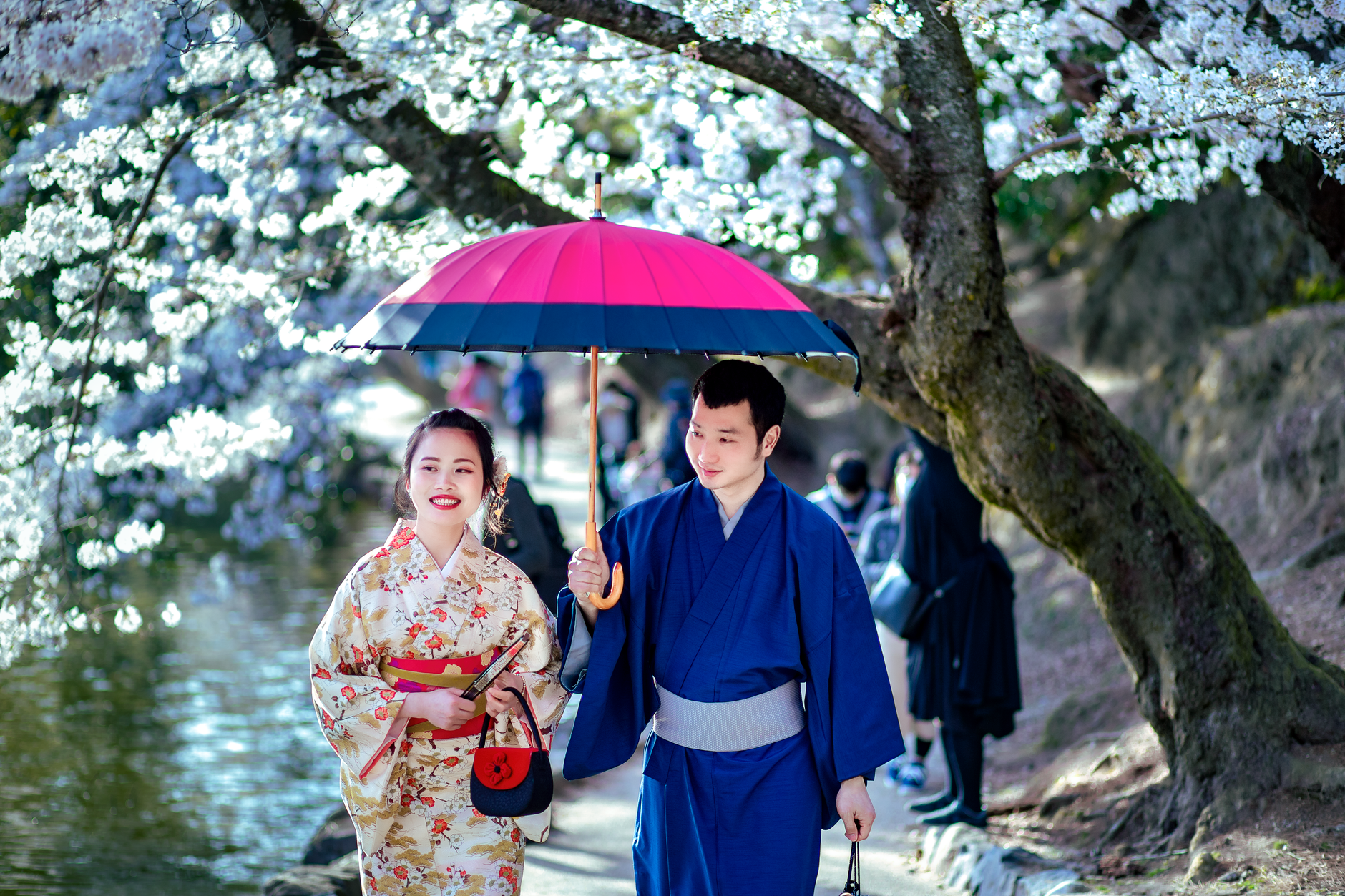
Japan offers international couples an extraordinary combination of ancient ritual, breathtaking scenery, and meticulous attention to detail that is almost impossible to replicate elsewhere. Whether you envision exchanging vows beneath thousands of cherry blossoms in Kyoto's Maruyama Park, standing before a vermilion torii gate at Fushimi Inari, or sharing a quiet moment on a snow-dusted mountain in Hakuba, Japan's landscape shifts dramatically with every season — giving couples a genuinely unique backdrop no matter when they visit. The country's culture of omotenashi (wholehearted hospitality) means that vendors, venue coordinators, and photographers approach every wedding as if it were the only one they will ever produce. Attention to fabric quality, floral arrangement, and timing is meticulous in a way that genuinely elevates the experience beyond what many Western markets offer at comparable price points. Even small elopements of two people receive the same careful preparation as large celebrations. Vow renewals hold particular appeal in Japan because the country has no legal requirement tied to the ceremony itself — you are free to craft a deeply personal, spiritually resonant ritual without navigating civil paperwork. For elopements, the legal marriage can be registered at a Japanese municipal office if you choose, or couples simply hold a symbolic ceremony and handle legalities at home. Both paths are common, well-supported, and celebrated here.

Tip: If symbolism matters to you, consider a Shinto-style ceremony (san-san-kudo sake ritual included) even for a party of two — many shrines and hotels offer this for as few as two guests.

Legal Marriage in Japan: What International Couples Must Know

Japan does allow foreign nationals to register a legal marriage at a Japanese municipal office (shiyakusho or kuyakusho), and the marriage will be internationally recognized. However, the paperwork requirements are significant and must not be underestimated. Both partners need an Affidavit of Competency to Marry (sometimes called a Certificate of No Impediment) issued by their own country's embassy or consulate in Japan. Requirements vary by nationality — some countries (including the UK, Australia, and Canada) issue this document readily, while others require additional steps. Once you have your affidavit, both parties need official translations into Japanese, your passports, and completed Japanese application forms. The process is submitted to the local municipal office where you will be staying, and approval typically takes one to several business days depending on the ward. There is no mandatory waiting period after submission in most cases, and there is no fee for the registration itself. Your marriage certificate (kon-in todoke) will be issued in Japanese — you should also request a certified copy (tohon) for use abroad. Because requirements change and vary significantly by country of origin, we strongly recommend contacting your home country's embassy in Tokyo well in advance — ideally three to six months before your trip. Many couples working with a Japan wedding planner choose to handle legal marriage at home and hold only a symbolic ceremony in Japan, which avoids the documentation complexity entirely and is equally meaningful. Note that Japan does not currently legally recognize same-sex marriage at the national level, though several major cities including Tokyo, Osaka, and Kyoto issue partnership certificates. Same-sex couples are warmly welcomed by the overwhelming majority of Japan's wedding industry for symbolic ceremonies.

Tip: Embassy appointment slots fill quickly. Book your Affidavit of Competency to Marry appointment at least 8–12 weeks before your Japan travel date.

Choosing Your Setting: Iconic Venues Across Japan

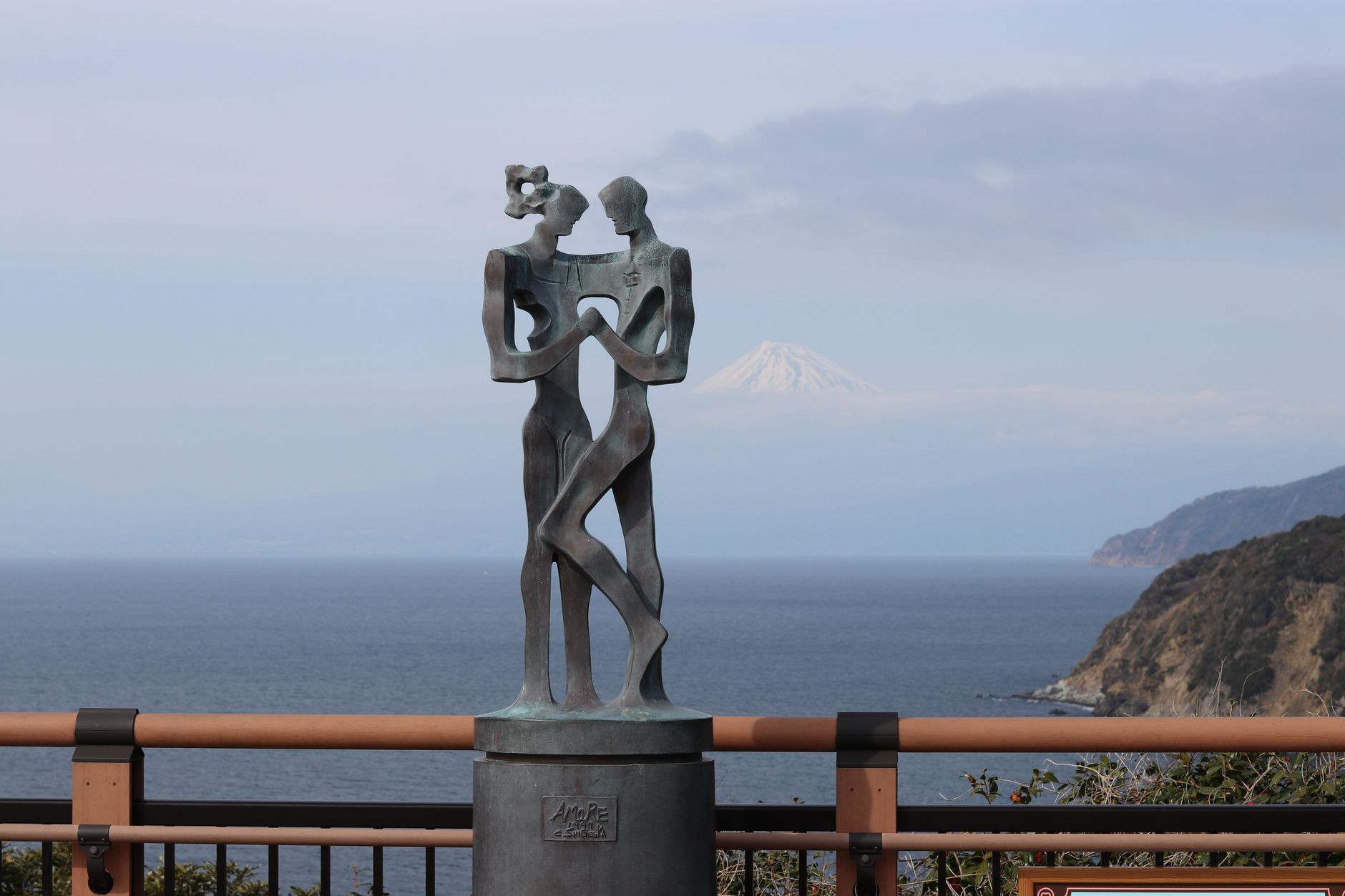
Kyoto remains the most requested destination for elopements and vow renewals, and for good reason. The city is home to over 1,600 Buddhist temples and 400 Shinto shrines, many of which partner with wedding coordinators to host ceremonies. Kamigamo Shrine and Heian Jingu are popular for full Shinto ceremonies; Jonangu Shrine's plum and weeping cherry gardens are beloved for garden-style shoots in late February through April. A private ceremony permit at a Kyoto shrine typically costs between ¥150,000 and ¥500,000 depending on the level of ritual and vendor involvement. Tokyo offers urban elegance and world-class hotels. The Palace Hotel Tokyo, Aman Tokyo, and Park Hyatt Tokyo all have dedicated wedding teams experienced with international couples. Rooftop ceremonies with views of the Imperial Palace Gardens or nighttime Tokyo skylines create a dramatically different mood from Kyoto's temples. Hotel ceremony packages in Tokyo generally start around ¥300,000 for two people and scale based on inclusions. For couples seeking nature immersion, Hakone (with Mt. Fuji views over Lake Ashi), Nikko's cedar-lined avenues in Tochigi Prefecture, the bamboo groves of Arashiyama, and the dramatic coastal cliffs of the Izu Peninsula all provide striking alternatives to city settings. Okinawa's coral beaches and clear turquoise water attract couples wanting a tropical Japan experience — the Kerama Islands in particular offer white sand and remarkable underwater clarity for adventurous post-ceremony photos. Northern Hokkaido delivers something entirely unique: winter elopements surrounded by powder snow in Niseko or spring wildflower meadows in Furano in June and July. Japan's geographic range means that regardless of your aesthetic vision — alpine, coastal, urban, garden, or ancient — there is a setting that fits.

Tip: Arashiyama's bamboo grove is extremely crowded by 9 a.m. Request a photographer who can arrange an early-access or twilight shoot through a local permit.

Ceremony Styles: Shinto, Western Chapel, Garden & Symbolic

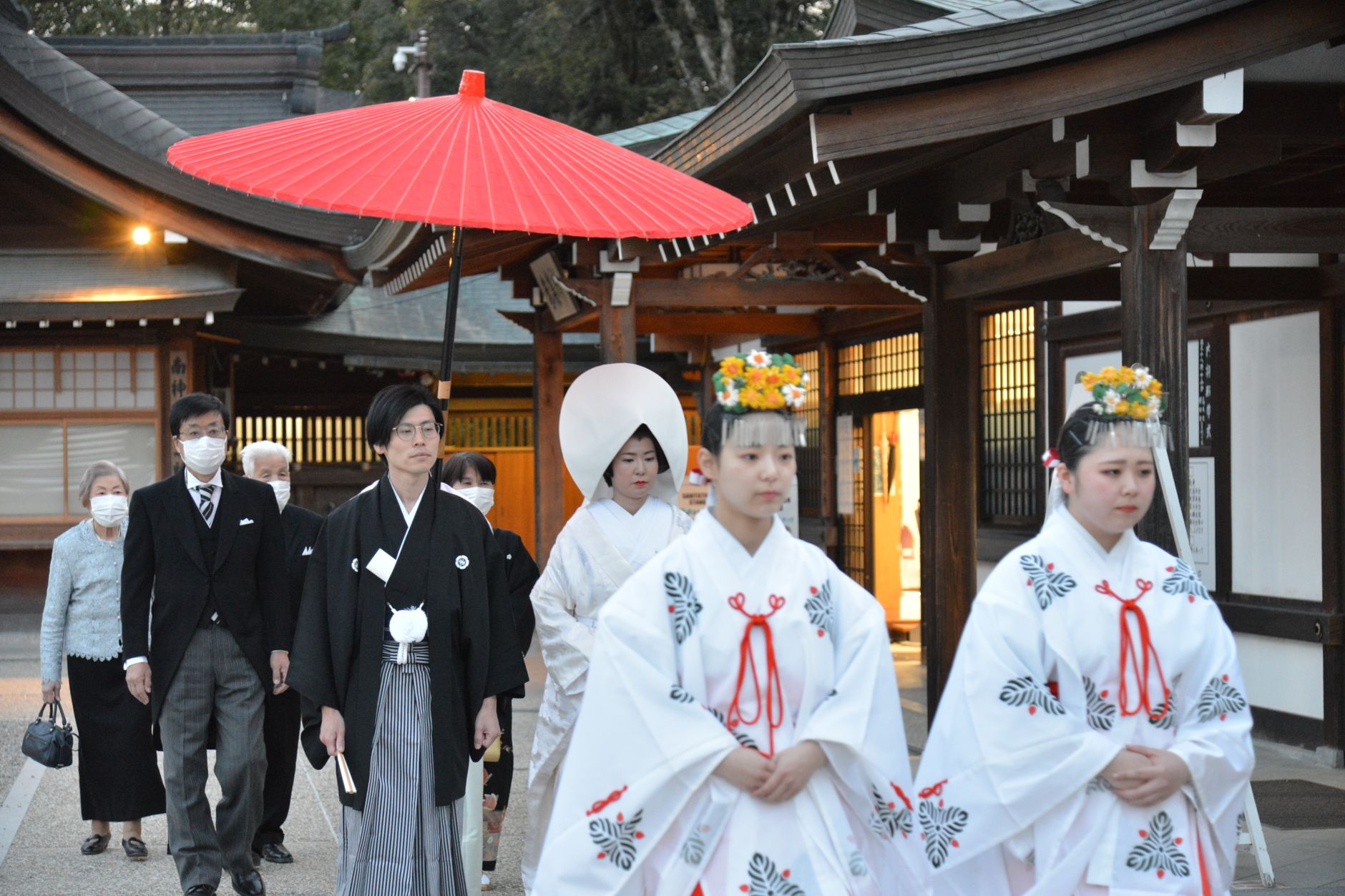
A traditional Shinto ceremony (shinzen shiki) is one of the most moving experiences available to couples in Japan and is open to non-Japanese and non-Shinto couples at many shrines. The ceremony is conducted by a Shinto priest (kannagi) and includes purification rituals, the san-san-kudo (sharing sake in three sips from three cups, symbolizing union of two families and the divine), exchange of nuptial cups, and the reading of a norito (sacred prayer). Traditional wedding kimono — the white shiromuku for brides and black montsuki hakama for grooms — can be rented from the shrine or nearby kimono houses for approximately ¥50,000–¥150,000 per outfit including dressing assistance. Western-style chapel ceremonies are enormously popular in Japan, partly driven by domestic fashion trends, and many hotels and standalone chapel venues have English-speaking officiants (often local pastors or bilingual celebrants) experienced with international vows. These are entirely symbolic in most cases and allow couples to write personal vows, choose their music, and structure the ceremony as they wish. Chapel ceremony packages typically start at ¥200,000–¥400,000 and include officiant, flowers, and basic coordination. Garden and outdoor ceremonies have grown significantly in popularity post-pandemic. Private ryokan (traditional inn) gardens, hotel rooftops, bamboo pavilions, and lakeside platforms provide intimate outdoor settings with a distinctly Japanese aesthetic. These often pair beautifully with a tea ceremony experience either before or after the vows, which can be arranged through the ryokan or a local tea school for approximately ¥5,000–¥20,000 per person. For vow renewals in particular, a fully symbolic, self-crafted ceremony with a bilingual celebrant and fine-art photographer is increasingly the preferred format. This gives couples complete creative control — incorporating origami, lantern releases (where legally permitted), or even a private kaiseki dinner as part of the ritual — without being bound to any specific religious or cultural script.

Tip: Ask your ceremony coordinator whether the shrine or venue requires couples to observe a modest dress code during transit — some require robes to be worn only within the inner precincts.

Seasons, Timing & What Each Brings

Japan's four seasons are genuinely distinct and each creates a completely different visual and emotional atmosphere. Cherry blossom season (sakura) from late March through mid-April is Japan's most famous and most competitive wedding window. Peak bloom lasts only seven to ten days and varies by location and year — Kyoto typically peaks around late March to early April, while Hokkaido blooms in early May. This period books out twelve or more months in advance for photographers and venues. Expect premium pricing: photographer day rates can run ¥150,000–¥300,000+. Summer (June through August) brings lush green foliage, hydrangea (ajisai) in bloom through June, and vivid festival culture. The weather in Honshu is hot and humid, so morning ceremonies (before 10 a.m.) are advisable. Okinawa is ideal in early June before typhoon season intensifies. Hokkaido's lavender fields in Furano peak in mid-July and provide a purple-pink spectacle rivaling the cherry blossoms in visual drama. Autumn (koyo, or fall foliage) from mid-October through late November is arguably Japan's most photogenic season and is slightly less crowded than cherry blossom season. Kyoto's Tofukuji Temple gardens turn scarlet and gold; Nikko's mountains blaze with color; even urban parks like Tokyo's Shinjuku Gyoen become extraordinary. Temperatures are comfortable and the light is warm — this is the season many photographers consider optimal. Winter elopements are deeply underrated. Snow-covered shrines in Kanazawa, the lantern-lit streets of Kyoto under frost, or the dramatic snowscapes of Niseko provide intimate, quiet settings that peak-season crowds obscure. Kimono portraits in snow are among the most striking images couples bring home. Pricing is generally lower outside of the December holiday window, and venues have greater availability.

Tip: For cherry blossom timing, monitor the Japan Meteorological Corporation's annual sakura forecast (released each February) and build two buffer days into your itinerary for flexibility.

Budgeting Realistically: Costs & What to Expect

A fully guided elopement or vow renewal in Japan for two people — including ceremony coordination, kimono rental, hair and makeup, a professional photographer for four hours, and a symbolic ceremony — typically costs between ¥400,000 and ¥900,000 (approximately USD $2,700–$6,000 at 2024 exchange rates), depending on location, season, and vendor tier. This does not include flights, accommodation, or meals. Breaking this down: photography for 4–6 hours ranges from ¥80,000 to ¥250,000; kimono rental and dressing ¥50,000–¥150,000 per person; hair and makeup ¥30,000–¥80,000; ceremony coordination and officiant ¥100,000–¥300,000; venue/permit fees ¥30,000–¥200,000. Luxury packages at five-star hotels or exclusive shrine venues can exceed ¥2,000,000 when florals, video, multi-location photography, private kaiseki dinner, and luxury transportation are included. On the more intimate end, a beautifully styled two-hour elopement shoot with a bilingual coordinator and kimono rental at a public park or accessible shrine can be achieved for ¥200,000–¥350,000 without a ceremony component. Accommodation costs vary enormously. A traditional ryokan with kaiseki dinner and breakfast per night ranges from ¥30,000 to ¥150,000+ per person at top properties like Kyoto's Hiiragiya or Gion Hatanaka. City hotels in Tokyo start lower but luxury properties (Four Seasons, Aman, Mandarin Oriental) run ¥80,000–¥200,000 per night. Couples should budget a minimum of ¥2,000,000–¥3,000,000 total for a seven-to-ten-day Japan wedding trip at a comfortable but not extravagant level. Tipping is not customary in Japan and should not be offered — excellent service is considered a professional standard, not something rewarded with gratuity. Expressing sincere gratitude verbally and leaving a thoughtful Google or social media review is genuinely appreciated by small vendors.

Tip: Vendors who quote in USD on English-language platforms often charge a 15–25% convenience premium. Booking through a Japan-based coordinator who invoices in JPY frequently offers better value.

Planning Timeline, Coordinators & Making It Seamless

For cherry blossom or autumn foliage dates, begin planning twelve to eighteen months in advance. For other seasons, six to nine months is generally sufficient for a well-structured elopement. Key milestones: secure your photographer first (they book earliest), then your ceremony venue or coordinator, then accommodation, then hair and makeup artists. Kimono rental can usually be arranged two to four months out through your coordinator. Working with a Japan-based wedding coordinator who specializes in international couples is strongly recommended for first-time visitors. A good coordinator handles permit applications (many popular locations in Kyoto and Tokyo now require photography permits — Philosopher's Path and certain shrine precincts have introduced restrictions since 2022), manages vendor communication in Japanese, troubleshoots weather contingencies, and ensures that cultural protocols are observed respectfully. Coordination fees typically range from ¥80,000 to ¥300,000 depending on scope. For couples who want a meaningful cultural experience rather than a purely logistical transaction, building in experiences around the ceremony pays dividends. A private matcha tea ceremony the morning before your vows, an evening of watching the sun set over Kyoto from Kiyomizudera's wooden stage, or a private onsen bath in your ryokan before the celebration dinner — these moments become as treasured as the ceremony itself. Japan rewards couples who slow down and immerse. Finally, pack light formal layers. Japan's indoor-outdoor ceremony transitions, potential weather changes, and train travel between locations all benefit from versatility. Your coordinator can advise on local rental options for accessories and footwear so that traveling with bulky items becomes unnecessary. Many bridal kimono rental packages include tabi socks, zori sandals, and all accessories — confirming inclusions in writing before arrival avoids surprises.

Tip: Create a shared folder with your coordinator containing all passport copies, affidavit documents, and shot-list preferences at least six weeks before arrival — it dramatically reduces last-minute stress.