外国人在日本合法结婚完全指南
Weddings 9 min read

外国人在日本合法结婚完全指南

Understanding the Two Types of Marriage in Japan

When international couples talk about 'getting married in Japan,' they usually mean one of two very different things: a legal marriage registered with Japanese civil authorities, or a symbolic wedding ceremony with no legal standing in your home country. It is crucial to understand this distinction before you begin planning, as the paperwork requirements and timelines differ significantly. A legal marriage in Japan is completed by submitting a 'Kon-in届 (Kon-in Todoke),' or Marriage Notification Form, to a local municipal office (市区町村役場, shiku-chōson yakuba). Once accepted, the marriage is legally valid in Japan, and most countries—including the United States, UK, Australia, Canada, and EU member states—will recognize it as legally valid at home too, provided you follow the correct reporting procedures afterward. A symbolic or 'blessing' ceremony, on the other hand, is a beautiful celebration—often held at a Shinto shrine, Christian-style chapel, or garden venue—but carries no legal weight on its own. Many couples choose to register legally in their home country first and then hold a symbolic ceremony in Japan, which dramatically simplifies the paperwork burden. Both paths are equally celebrated and joyful; just be clear from the start which route you want to take.

Tip: Decide early: legal registration in Japan requires significant advance document preparation, sometimes 2–3 months before your trip. A symbolic ceremony can often be planned in 4–6 weeks.

Key Documents You'll Need as a Foreign National

To register your marriage legally at a Japanese municipal office, both parties must provide a 'Certificate of Eligibility to Marry' (also called a 'Certificate of No Impediment' or 'Affidavit of Single Status'). This document, issued by your home country's embassy or consulate in Japan, confirms that you are legally free to marry—meaning you are not already married and meet your country's marriage requirements. Requirements vary: the US Embassy, for example, provides a 'Statement of Marital Status,' while the UK issues a 'Certificate of No Impediment.' Contact your embassy several weeks in advance, as processing times range from a few days to several weeks. You will also need your valid passport, and in most cases a certified translation of every foreign-language document into Japanese. Japan does not have an official list of approved translators; however, the translation must be accurate and signed by the translator. Professional legal translation services in Japan typically charge ¥5,000–¥15,000 per document. If one partner holds Japanese citizenship, their family register (戸籍謄本, koseki tōhon) will be required instead of the foreign eligibility certificate. Some municipalities also ask for proof of address or a residence card (在留カード, zairyu card) if you are a registered resident of Japan. If you are visiting as a tourist, you will present your passport and the relevant embassy documents only. It is strongly recommended to call or email your target municipal office ahead of time to confirm their exact document checklist, as requirements can vary slightly by city or ward.

Tip: Book your embassy appointment at least 6–8 weeks before your planned registration date. US citizens in Tokyo can schedule appointments at usembassy.gov/japan. UK citizens should contact the British Embassy Tokyo directly.

Step-by-Step: The Registration Process at the Municipal Office

Once your documents are gathered and translated, the registration process itself is refreshingly straightforward. Visit the local municipal office (役場) of the city or ward in Japan where you wish to register. You can technically register in any municipality—you do not need to be a resident there—which gives you the romantic option of registering in Kyoto, Nara, or wherever your ceremony takes place. Request the Kon-in Todoke form at the civil affairs counter (戸籍係, koseki-gakari). The form is in Japanese; many offices in major cities and tourist areas have staff who speak basic English, but bringing a Japanese-speaking friend or interpreter is highly recommended. Fill in all required fields, attach your supporting documents, and submit everything to the clerk. You will also need two adult witnesses—Japanese or foreign nationals aged 18 or over—who must sign the form. These can be friends, tour coordinators, or hotel concierge staff who are willing to help. The clerk will review your documents on the spot. If everything is in order, the marriage is registered immediately—there is no waiting period in Japan, unlike in some countries. You will not receive a marriage certificate in the Western sense; instead, the record is entered into the koseki (family register) system or, for foreign nationals, noted in a separate register. Request a certified extract (婚姻届受理証明書, kon-in todoke juri shōmei-sho) for approximately ¥350, which serves as your proof of marriage for international purposes.

Tip: Most municipal offices are open Monday–Friday, 8:30 a.m.–5:15 p.m. Some larger city offices (e.g., Shinjuku Ward in Tokyo) accept after-hours submissions at a night window, but document verification typically happens the next business day.

Reporting Your Japanese Marriage Back Home

After your marriage is registered in Japan, you must report it to your home country to have it recognized there. The process varies by nationality, but generally involves submitting your Japanese marriage registration extract (婚姻届受理証明書), your passports, and any required forms to your home country's embassy in Japan or directly to your home government upon returning. US citizens, for example, do not register marriages with the US government—your Japanese marriage is automatically recognized once you show certified documents when updating your Social Security record, passport, or driver's license. However, you should have your Japanese documents apostilled (authenticated under the Hague Convention) if you plan to use them officially. Japan joined the Hague Apostille Convention in May 2023, making this process significantly simpler. Apostilles can be obtained from the Ministry of Foreign Affairs (外務省) for a fee of ¥1,300 per document. UK nationals must register the marriage with the General Register Office after returning home. Australian citizens report to the Australian Embassy and eventually the relevant state registry. Always check the specific requirements with your home country's embassy in Japan before leaving, and keep several certified copies of your Japanese marriage registration document—you will likely need them more than once.

Tip: Japan's 2023 accession to the Hague Apostille Convention was a game-changer. You no longer need to go through the lengthy 'chain authentication' process. A single apostille from the Japanese Ministry of Foreign Affairs is now accepted in all 125 member countries.

Symbolic Ceremonies: Shinto, Chapel, and Garden Weddings

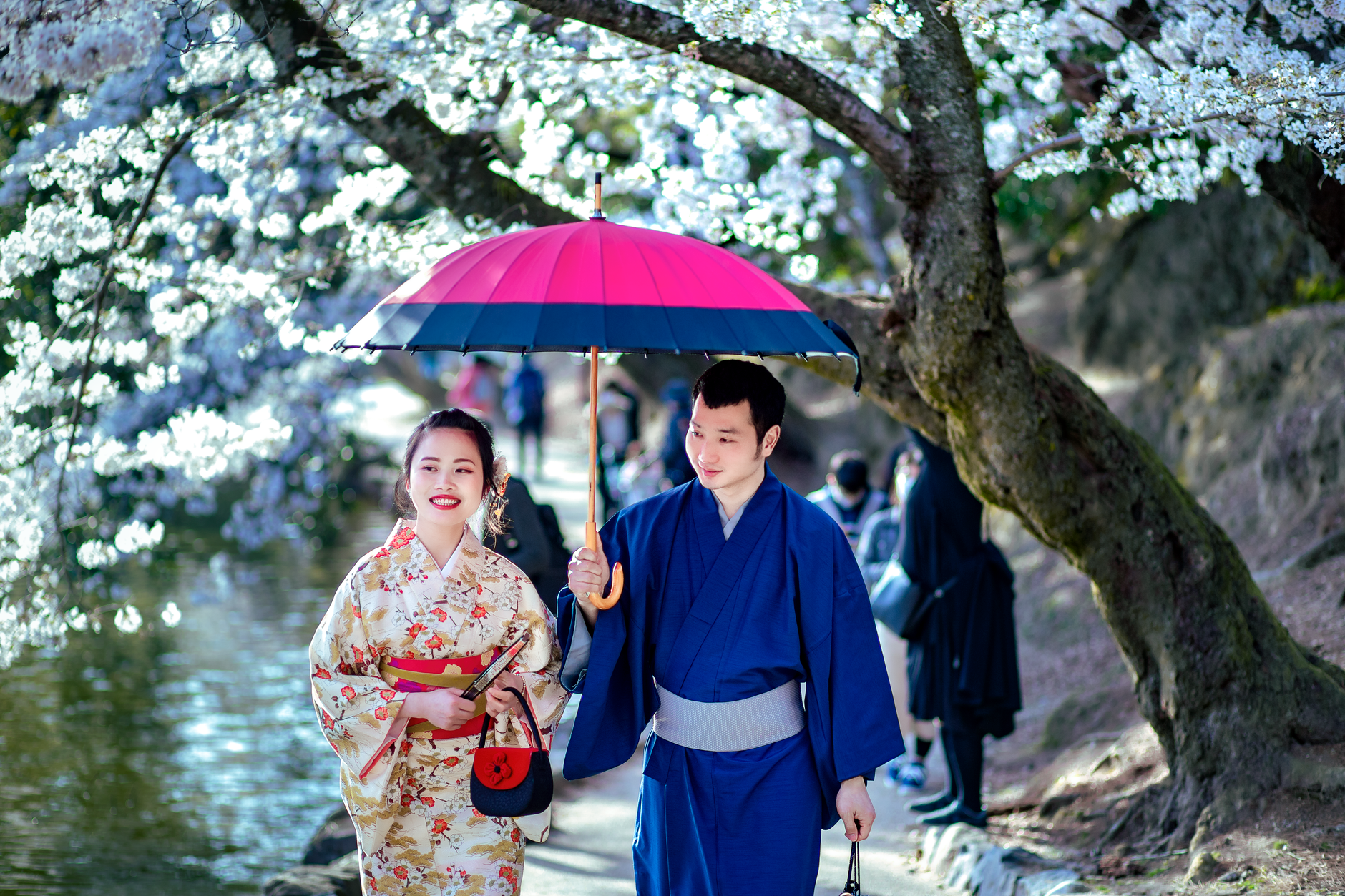
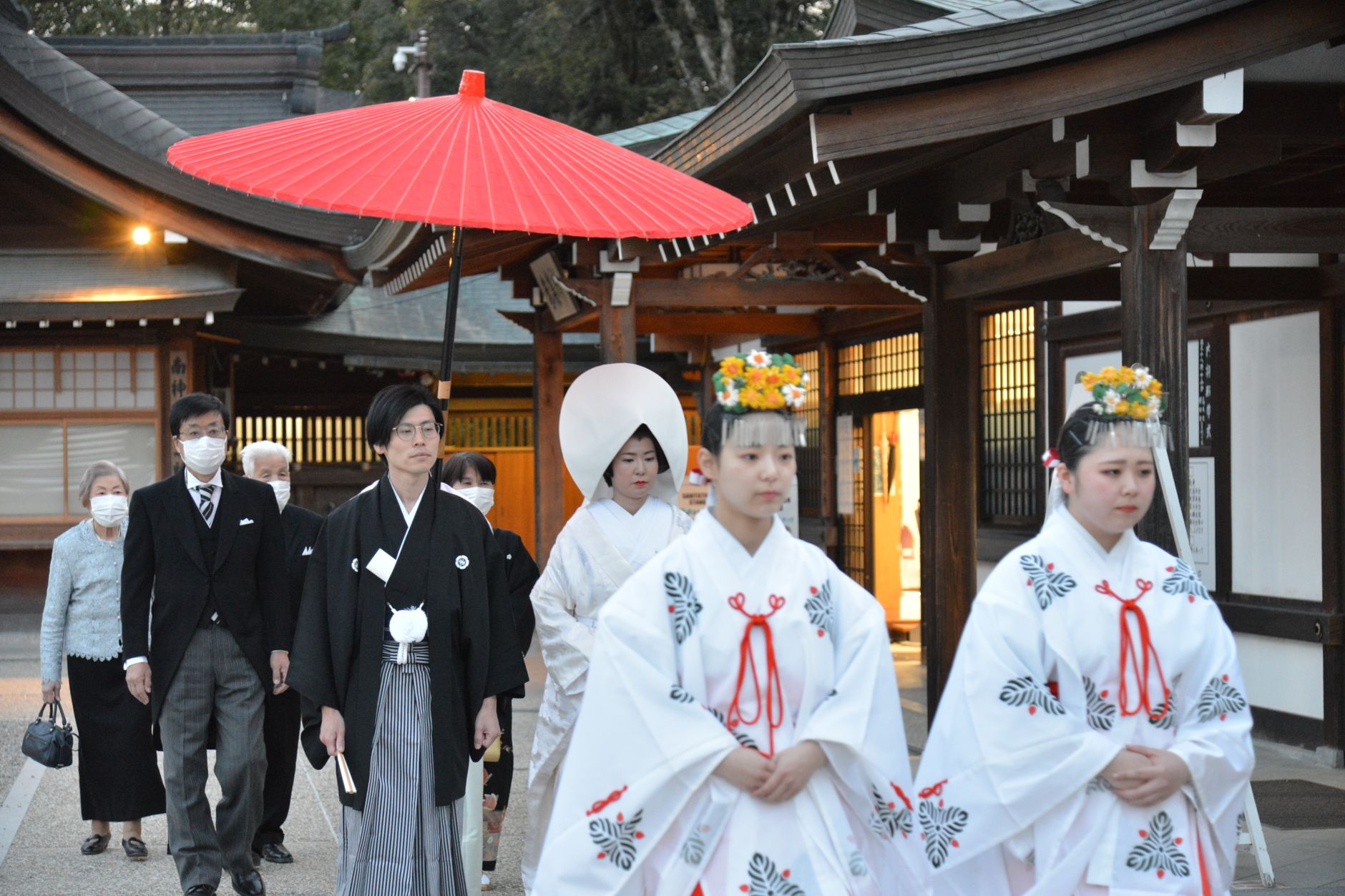
For many international couples, the symbolic ceremony is the heart of the Japan wedding experience, and the options are breathtaking. A traditional Shinto (神前式, shinzen-shiki) ceremony at a shrine such as Meiji Jingu in Tokyo, Fushimi Inari in Kyoto, or Itsukushima Shrine on Miyajima Island is deeply atmospheric. Couples wear matching white shiromuku kimono and hakama, exchange san-san-kudo (三三九度) sake cups, and are blessed by a Shinto priest. Prices vary widely: a basic Shinto ceremony package starts at around ¥150,000–¥300,000, with full kimono rental, hair, makeup, and photography easily bringing the total to ¥500,000–¥1,200,000. Christian-style chapel weddings (チャペル式, chaperu-shiki) are enormously popular in Japan, even among non-Christian couples, because of their romantic aesthetic. Venues range from dedicated wedding halls with purpose-built chapels in cities like Tokyo, Osaka, and Yokohama to hillside retreats in Hakone or lakeside venues in Nikko. These are purely ceremonial and legally meaningless in Japan, but photogenic beyond measure. Budget roughly ¥300,000–¥800,000 for a ceremony-only package at a mid-range venue. Garden and outdoor weddings at traditional machiya townhouses in Kyoto, castle grounds, or coastal venues in Okinawa are increasingly available through specialist wedding planners catering to foreign couples. Seasons matter deeply: spring (late March–early May) for cherry blossoms and autumn (mid-October–mid-November) for crimson maples are the most popular and most fully booked periods. Book garden venues 9–12 months ahead for these peak seasons.

Tip: Many Shinto shrines require a formal application process and may restrict ceremonies to registered parishioners or through a designated ceremony coordinator. Work through a licensed nakōdo (仲人) or wedding planner who already has a relationship with the shrine.

Costs, Timelines, and Practical Planning

Legal registration costs in Japan are minimal—the Kon-in Todoke form is free, the marriage extract costs around ¥350, and translations and embassy fees are the main expenses, typically totaling ¥20,000–¥60,000 depending on your nationality and how many documents require translation. If you want an apostille, add ¥1,300 per document plus travel to the Ministry of Foreign Affairs office (in Tokyo, Osaka, or other major cities). For a full wedding celebration, costs scale quickly. A modest symbolic ceremony with a small reception in Japan can run ¥800,000–¥1,500,000. A full-day Kyoto experience with kimono rental, Shinto ceremony, professional photography, a kaiseki dinner reception for 10–20 guests, and transport can reach ¥2,000,000–¥4,000,000. Tokyo luxury hotel weddings at venues like The Prince Gallery or Palace Hotel Tokyo start at ¥3,000,000 and climb steeply from there. Okinawa beach weddings offer a more relaxed mid-range option, with all-inclusive packages for small groups available from ¥600,000–¥1,200,000. Timeline planning should work roughly as follows: 6–12 months before, book your venue and ceremony coordinator; 3–4 months before, begin gathering embassy documents; 2 months before, arrange translations; 1 month before, confirm all documents with the target municipal office; and on the day itself, allow at least 2–3 hours for the municipal office process, plus celebration time.

Tip: Exchange rates fluctuate—budget in JPY from the start and keep a 15–20% buffer. Many wedding vendors in Japan require non-refundable deposits of 30–50%, so purchase travel insurance that includes wedding cancellation coverage.

Working with a Wedding Coordinator in Japan

Navigating Japanese bureaucracy and wedding culture in a foreign language is genuinely challenging, and working with a professional coordinator who specializes in international couples is one of the best investments you can make. Coordinators typically handle municipal office document checks, interpreter services, vendor negotiations, shrine or venue applications, and day-of logistics. Fees range from ¥50,000 for basic consultation and document assistance to ¥300,000–¥500,000 for full-service planning. When choosing a coordinator, look for someone who is bilingual (Japanese and your language), has verified relationships with specific venues or shrines you want, and can provide references from previous international couples. Ask explicitly whether they handle the legal registration process or only the ceremonial side—many ceremony-focused coordinators do not assist with the Kon-in Todoke paperwork. Some full-service Japan wedding agencies, including those partnered with HelloJapan.jp, bundle both services. Finally, embrace the process itself as part of your Japan experience. Visiting the municipal office in a city like Kyoto or Nara, submitting your Kon-in Todoke, and stepping outside as legally married—surrounded by temple rooftops or bamboo groves—is quietly magical. Japan rewards careful preparation with extraordinary beauty, and your wedding here will likely be one of the most memorable, detail-rich days of your lives.

Tip: Ask your coordinator for a LINE account (Japan's dominant messaging app) rather than relying on email. Most Japanese vendors communicate faster and more reliably via LINE, and your coordinator can act as a real-time intermediary throughout the planning process.